
June 15th, 2026
Vicki Sokolik's If You See Them: Young, Unhoused, and Alone in America exposes a crisis many Americans rarely think about: teenagers living without parents, stable housing, or reliable support systems. Combining personal memoir, social commentary, and stories from her nonprofit organization, Starting Right, Now (SRN), Sokolik gives a voice to the thousands of "unaccompanied homeless youth" who often fall through the cracks of America's child welfare system.
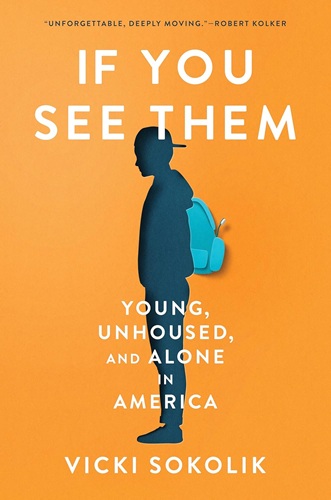
The book begins by introducing readers to these invisible teenagers: young people who have fled abuse, neglect, addiction, abandonment, or family dysfunction. Because they were not formally removed from their homes by the state, they often do not qualify for foster care and are largely left to fend for themselves. As Sokolik makes clear, many are forced to make adult decisions while still trying to survive high school.
The most moving part of the book is the collection of deeply personal stories. Students such as Amanda, Courtney, Skye, Shaq, Sergio, Taylor, Randall, Sophia, and Amari become far more than statistics. Through their experiences, we see the devastating consequences of homelessness, food insecurity, family instability, trauma, and untreated mental health issues.
Several stories stand out. Courtney, whose mother was deported and whose father was absent, remained determined to become a nurse despite periods of homelessness. Even after excelling in college, a misdemeanor she received for stealing a jacket while sleeping in a park nearly derailed her future.
Sergio overcame abandonment, intimidation from his stepfather, and the discovery that the man he believed was his father was not biologically related to him. His story becomes a remarkable achievement: helping pass Florida legislation that gives unaccompanied youth easier access to birth certificates and legal documents.
Another interesting student is Shaq. Initially, he seems destined for failure. He skips work, displays a poor attitude, struggles academically, and repeatedly tests the patience of those trying to help him. Yet Amanda (formerly an unaccompanied youth and now a mentor) makes an eye-opening observation — realizing that Shaq expects people to abandon him because that has been his life experience. His resistance comes down to self-protection.
Over time, Shaq graduates from high school, avoids a path that led many of his friends to prison, and eventually builds a career in welding and commercial trucking. His journey reinforces one of the book's central themes that Vicki ultimately realizes herself: success does not always look the same for everyone.
Sokolik effectively highlights the lasting impact of trauma. Even when students secure housing and graduate from high school, their struggles are often far from over. Skye, for example, successfully enrolls in college but later battles major depressive disorder. Sokolik notes that suicide is the leading cause of death among unaccompanied youth, a sobering reminder that housing alone cannot erase years of emotional wounds.
Alongside the students' stories runs Sokolik's own family narrative, particularly her daughter Cori's battle with severe epilepsy. Cori's failed brain surgery, ongoing seizures, and eventual improvement through an implanted medical device are what pushes Sokolik to help others. Vicki writes, “My work with people experiencing homelessness started because I was trying to make myself feel better. I worried that I had let my family down, so I began uplifting others. I wanted to show the world that I was a good and useful person. It was a way to protect myself from judgment.”
The book is not without flaws. Sokolik frequently revisits her affluent upbringing, describing luxury cars, extravagant gifts, and a mansion large enough to host filming for the television series Dallas. While she later reveals that her family suffered devastating financial losses after an investment scam destroyed her father's business, the repeated references to wealth can occasionally feel distracting and unnecessary.
However, this doesn’t take anything away from Vicki’s continuous acts of kindness. Sokolik and SRN help pass multiple laws protecting unaccompanied youth, establish community housing programs, and create lasting support networks. And there are successes that Vicki (and SRN) should be proud of: Courtney becomes a registered nurse. Skye becomes a physician's assistant. Taylor becomes a social worker. Sergio works in nonprofit case management. Randall becomes a manufacturing supervisor. Sophia works as a domestic violence advocate. Even students who do not follow traditional college pathways, such as Shaq, build productive lives.
After years of working with unaccompanied youth, Sokolik comes to an important conclusion: “Not every student who enters our program wants to attend college or is even set up for success in that arena. It took me a while to see that, the way it took me time to understand a number of other realities. College is no longer a firm goal for our kids. There are so many other paths to stability and security.”
If You See Them succeeds in making the invisible visible and demonstrates how one caring adult—and one committed organization—can fundamentally change the trajectory of a child's life.
Buy the book on Amazon.
_________________________________________________________________