
Sep 15, 2026
Ruth McKee's Wild Iris is a dark but sometimes humorous novel that explores fragmented memories, depression, betrayal, and the wounds that pass from one generation to the next.
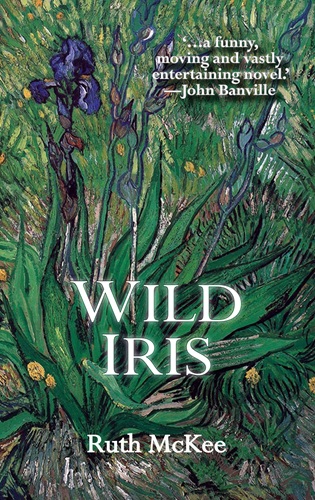
Eve, a 42-year-old woman living in Dublin is depressed, isolated, and increasingly consumed by thoughts of suicide. As she struggles to understand how she arrived at this point, the novel moves back and forth between her present life in Dublin, her childhood in Antrim, and her university years. Gradually, the fragments of Eve's past begin to form a much larger and more painful picture. McKee writes in sobering detail: "It was quite something really... to have self-esteem so low she didn’t think she was worthy enough to contemplate ending her life."
The novel's fragmented structure allows information to surface in pieces, sometimes revealing the significance of an event only much later. The effect is almost like remembering alongside Eve: details that initially seem incidental gradually acquire meaning. Even major events are sometimes revealed subtly, which makes the discoveries seem more natural or, in some cases, more shocking, like the throwaway statement that comes early in the novel: "Twenty one years it ago it was her twenty-first birthday; it was also the day that Louise died." As the novel approaches its conclusion, the fragments become larger and the connections between them clearer.
Eve's relationship with her mother, Gerty, is particularly interesting. Gerty is a deeply religious Presbyterian who seems emotionally distant from her daughter, and Eve grows up feeling that she somehow does not fit the template everyone else seems to have been given. At Louise's house, by contrast, Eve discovers makeup, takeout food, and a more unconventional family life. Louise's mother, Alice, may be chaotic, but to Eve she represents a kind of warmth and freedom missing from her own home.
That friendship with Louise eventually becomes complicated by Eve's relationship with Johnny. Eve meets Johnny at university, but he initially becomes involved with Louise. When Eve sleeps with him, she attempts to rationalize her actions, only gradually admitting to herself that what she has done feels like betrayal.
McKee also explores how the past refuses to remain buried. Eve's memories of her childhood, Louise's death, Johnny's abandonment, and the revelation of her biological mother all become intertwined. A disturbing childhood memory involving an injured bird named Bounce becomes symbolic of Eve's growing realization that, as McKee writes, "Eve understood that Gerty's belief of what was right and wrong might not always align with hers."
McKee also tackles the complicated nature of love. Eve spends much of her life believing she was unwanted, yet the novel gradually suggests that love can exist alongside damage, silence, selfishness, and misunderstanding. Her eventual confrontation with her biological mother is painful, and the only words Eve manages to say to her are, "I don't want to turn out like you."
By the end of the novel, Eve reaches a crisis point. Her thoughts of suicide have been present throughout the story, making the conclusion feel both inevitable and haunting. As she slips beneath the water, memories of the people she has loved and hurt surface in her mind. One of the novel's most poignant lines comes here, as she is slipping away in the bathtub: "Holding on to anger is... drinking poison and hoping the other person dies."
The ending is disturbing, leaving the reader with the feeling that Eve is still reaching for some small possibility of connection even as she disappears.
Wild Iris is a heartbreaking novel, but an affecting one. McKee creates a portrait of a woman whose present cannot be separated from the complicated history that shaped her. It's a worthy read and an intimate, often painful journey into the psyche of a woman haunted by her past and struggling to find a way forward.
Read an interview with the author and buy the book on Amazon.co.uk.
_________________________________________________________________