
July 16th, 2026
I'm Thinking of Ending Things is a sad book. The title is sad, the first lines are sad, and the ending is sad. In fact, the title carries a sense of dread, the opening pages reinforce it, and the novel never lets the reader escape the growing feeling that something terrible is waiting at the end of the road.
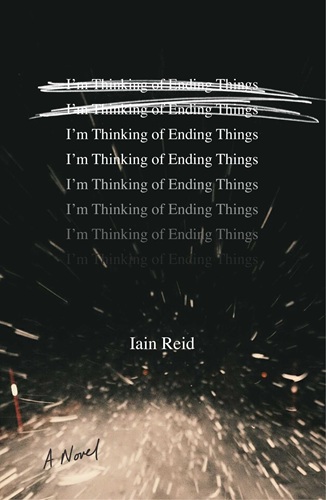
Yes, it’s undeniably a sad book, but it’s also a clever psychological thriller whose emotional impact comes from the way Iain Reid carefully constructs, and eventually deconstructs, the characters.
The story begins simply enough. Jake and his girlfriend are driving through the countryside so she can meet his parents for the first time. During the long drive, they discuss philosophy, poetry, science, memory, and aging while the unnamed narrator privately admits she is thinking about ending the relationship despite having known Jake for only six or seven weeks. Their conversations are thoughtful and often intimate, creating the impression of an ordinary couple navigating an awkward milestone.
Yet almost immediately, Reid plants seeds that something isn't right.
The narrator feels as though she is being stalked. She receives mysterious phone calls from her own number. One unsettling voice message repeats, "There's only one question to resolve."
Between the long drive and these chapters, there’s a parallel story: strange conversations between unnamed people discussing an unexplained tragedy. Readers hear fragments such as, "So did you know him?" and "Why did he do it in here?" The disconnected scenes gradually introduce the existence of a death, but without enough context to understand who died or why.
The visit to Jake's family farm only deepens the unease. Nothing is overtly horrifying, yet almost everything feels slightly wrong. Jake's parents seem to age dramatically from one moment to the next. Conversations drift into uncomfortable territory. An old family photograph appears to transform before the narrator's eyes until the child in the picture looks remarkably like her. The farmhouse itself feels frozen in time, filled with stories about suffering and decay, including a disturbing account of pigs slowly being eaten alive by maggots beneath their skin.
As the story progresses, the two narratives start to inch closer together. The conversations about an isolated man reveal someone who once worked in academia before eventually becoming a lonely school janitor living by himself in his parents' old farmhouse. He writes constantly because, as one character explains, writing is how he made sense of the world.
Meanwhile, Jake and his girlfriend's journey takes them to the very high school where the janitor works, and the novel's final act transforms into something surreal, unsettling, and heartbreaking.
Only in the final chapter does Reid fully reveal who has been narrating the various sections and how the seemingly separate storylines fit together. Earlier details that appeared random—the phone calls, the graffiti, the notebooks, even the girlfriend herself—suddenly take on entirely new meanings. The revelation rewards attentive readers by reframing nearly every scene that came before it.
I'm Thinking of Ending Things relies on atmosphere, psychological tension, and careful observation to explore loneliness, unrealized possibilities, and the stories people create to cope with lives that did not unfold as they had imagined.
The two intertwining stories (that meld into one) are unsettling from beginning to end, deeply melancholic, and remarkably inventive. Reid turns an ordinary road trip into an unforgettable meditation on memory, identity, and regret.
Buy the book on Amazon.
_________________________________________________________________