
May 31st, 2026
If you’re familiar with Etheridge Knight, you know his life was punctuated by the Korean war, drug addiction, and prison. Having said that, his poetry isn’t particularly dark, given his background. Knight writes with a calm, observational eye that is simultaneously tender and haunting.
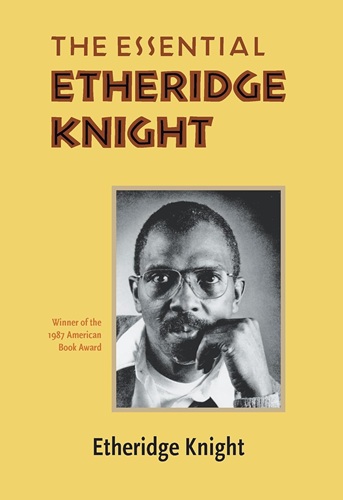
Knight’s poems about prison life feel like documentary snapshots, without the sentimentality and outrage. In poems like “A Wasp Woman Visits a Black Junkie in Prison,” Knight writes about the strange theater of incarceration with a sort of detached precision, simply recording what passes before him. The poem documents the awkwardness, loneliness, and absurdity within prison walls.
The same is true of “Hard Rock Returns to Prison From the Hospital for the Criminally Insane,” one of Knight’s most memorable poems. Hard Rock, once a rebellious and almost mythic prisoner, returns after a lobotomy reduced to something vacant and broken, “his eyes empty like knot holes in a fence.” In lesser hands, the poem might have turned into a loud political statement about institutional brutality. Knight chooses restraint instead.
What makes these poems powerful is Knight’s ability to transform ordinary prison details into something human. He notices gestures, silences, routines, and conversations that most writers would overlook. The prison in his work feels lived in, like a second home (which it was for Knight).
There are scarring poems, too, though. One of the more haunting ones is, “A Black Poet Leaps to His Death,” where he talks about the death of Mbembe Milton Smith, a poet who took his life at age 36. He writes, “it is I who hear your crush of bone, your splatter of brain, your tear of flesh on the cold Chicago stone…” Or the brief mention of his experiences with drugs in the poem, “Another Poem for Me (after recovering from an O.D.).”
Elsewhere, we see the treatment of Black men versus white men in prison in the “Rehabilitation & Treatment in the Prisons of America.” For Black men, prison isn’t rehabilitation; it’s a slow suicide.
However, you’ll find the emotional center of Essential Etheridge Knight probably in his more tender poems, particularly those dealing with ancestry and family memory. These are the poems where Knight’s voice softens. In one poem, he reflects on his seven-year-old niece writing to him in prison. The innocence of a child reaching through bars with words is almost devastating. And Knight lets the contrast speak for itself: childhood on one side, incarceration on the other.
Like the best poets, Knight understands rhythm beyond the line itself. We can hear the sounds of conversation, blues music, prison talk, and oral storytelling traditions. The language moves naturally, almost casually, but underneath that simplicity, you’ll notice he yields extraordinary control.
Reading the poems in Essential Etheridge Knight feels like listening to someone tell the truth without embellishment. His poems feel honest and tender. And honesty, when written this well, lasts.
Buy the book on Amazon.
_________________________________________________________________